

Now Reading: Modern Crop Protection Chemicals
-
01
Modern Crop Protection Chemicals

Modern Crop Protection Chemicals

Shaping Sustainable Indian Agriculture (2026)
Chlorantraniliprole represents a new-generation insecticide designed for precise control of lepidopteran pests in paddy and cotton systems. It delivers high efficacy at low application rates, reducing environmental load while maintaining crop productivity. Its targeted mode of action supports resistance management strategies in intensive farming. This molecule aligns with residue-compliance requirements critical for domestic and export markets.
glossary: A selective insecticide used to control stem borers and bollworms through muscle paralysis in insects.
Fipronil has become a benchmark molecule for managing soil and foliar insect pests in staple crops. Its broad-spectrum activity ensures consistent protection during vulnerable crop growth stages. When applied judiciously, it supports yield stability under high pest pressure conditions. Regulatory oversight ensures its use fits within modern safety frameworks.
glossary: A phenylpyrazole insecticide effective against chewing and sucking pests.
Pyraclostrobin plays a crucial role in disease management for rice cultivation under humid conditions. It enhances plant health by improving physiological efficiency beyond disease suppression. Farmers benefit from improved grain quality and stress tolerance. Its integration supports modern fungicide rotation programs.
glossary: A strobilurin fungicide that inhibits fungal respiration.
Tricyclazole remains vital for controlling blast disease in rice-intensive regions. Its specificity ensures strong protection during early and mid-growth stages. The molecule supports stable yields in high-risk agro-climatic zones. It is widely valued for its consistency and reliability.
glossary: A systemic fungicide used primarily against rice blast disease.
Pyroxasulfone addresses the growing challenge of herbicide-resistant weeds in wheat systems. It offers long-lasting residual control, reducing early crop competition. Farmers experience improved crop establishment and uniformity. Its use supports sustainable weed management planning.
glossary: A pre-emergence herbicide effective against resistant grassy weeds.
Gulli Danda has emerged as a major resistant weed affecting wheat productivity. Its aggressive growth competes directly for nutrients and moisture. Advanced herbicide strategies are required for effective suppression. Managing this weed is critical for long-term field sustainability.
glossary: A locally known resistant grassy weed in wheat fields.
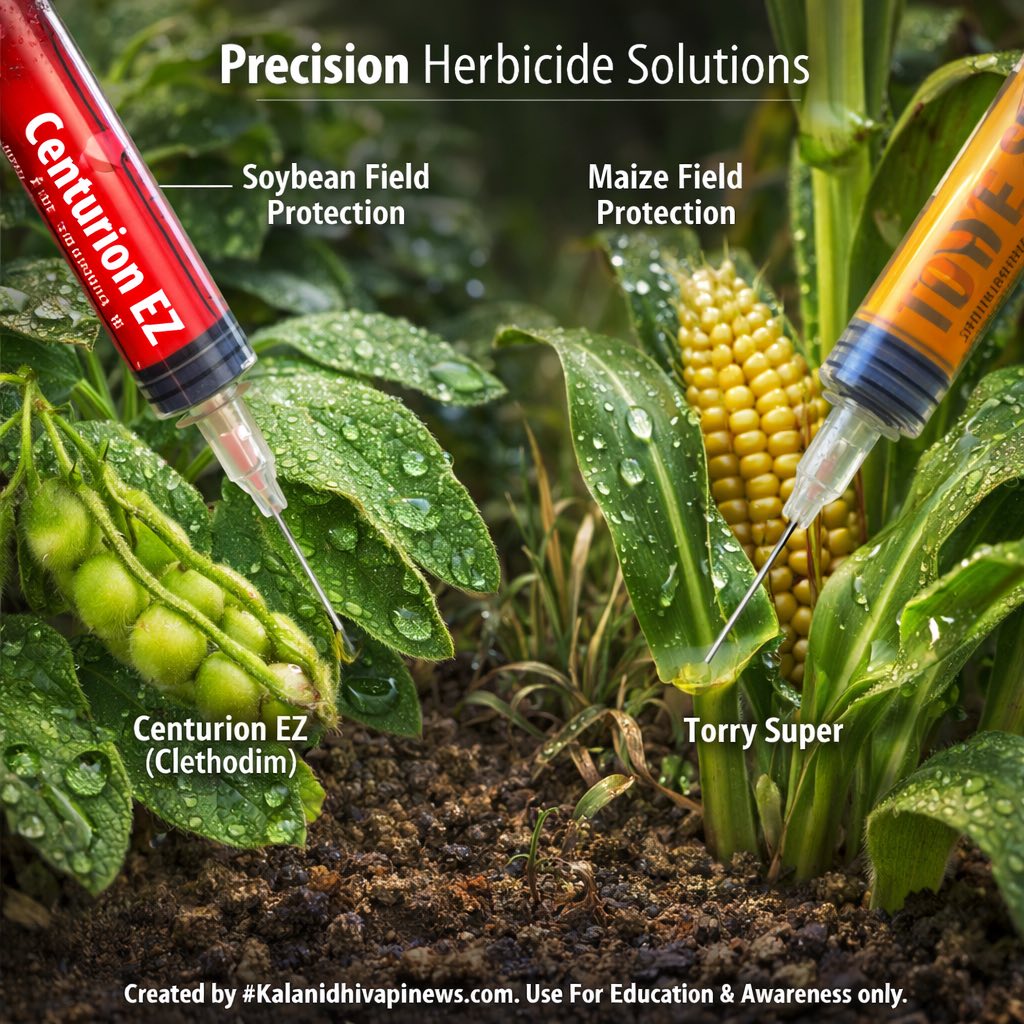
Centurion EZ provides targeted post-emergence weed control in soybean systems. It minimizes crop injury while effectively eliminating competing grasses. The formulation supports precision agriculture practices. Its reliability improves overall field uniformity.
glossary: A clethodim-based selective herbicide for grassy weed control.
Clethodim is widely used for selective grass weed management in broadleaf crops. It acts rapidly to stop weed growth without harming the crop. Its precision reduces unnecessary chemical exposure. This contributes to environmentally responsible farming.
glossary: A post-emergence herbicide targeting grassy weeds.
Torry Super supports precise weed control in maize cultivation. Its formulation ensures effective absorption and consistent performance. Farmers benefit from reduced weed competition during early growth. This enhances nutrient use efficiency.
glossary: A commercial herbicide formulation used in maize weed management.
Cyantraniliprole is increasingly adopted in high-value horticultural crops. It provides strong insect control while meeting residue standards. Export-oriented growers rely on its safety profile. Its use supports market access and compliance.
glossary: A diamide insecticide used in vegetables and fruits.
Oxyfluorfen is essential for weed control in onion production systems. It offers early-stage suppression, reducing labor dependence. Proper application ensures crop safety and field cleanliness. It supports efficient horticultural management.
glossary: A contact herbicide used for broadleaf weed control.
Paddy cultivation remains central to food security systems. Modern crop protection inputs safeguard yield potential. Integrated approaches improve resilience against pests and diseases. Sustainable practices ensure long-term productivity.
glossary: Flooded rice cultivation system.
Cotton farming faces intense pest pressure throughout the season. Advanced insecticides protect fiber quality and yield. Targeted solutions reduce unnecessary chemical load. This supports both farmer income and environmental safety.
glossary: A commercial fiber crop vulnerable to insect pests.
Rice production depends heavily on disease and pest management. Modern fungicides ensure stable output under climatic stress. Improved crop health enhances grain quality. This strengthens food supply chains.
glossary: A staple cereal crop grown extensively in Asia.
Wheat systems increasingly rely on advanced weed control solutions. Resistant weeds threaten productivity if unmanaged. Strategic herbicide use supports yield stability. Long-term planning ensures soil health.
glossary: A major cereal crop grown in rabi season.
Soybean cultivation benefits from selective post-emergence herbicides. Weed-free conditions improve pod development. Precision inputs reduce crop stress. This enhances oilseed productivity.
glossary: A protein- and oil-rich legume crop.
Maize requires early weed control for optimal growth. Targeted herbicides prevent nutrient competition. Uniform stands improve yield potential. Efficient management supports commercial farming.
glossary: A cereal crop grown for food, feed, and industry.
Chilli cultivation demands residue-compliant pest management. Advanced insecticides protect fruit quality. Market acceptance depends on safe produce. Precision use supports export readiness.
glossary: A high-value spice and vegetable crop.
Onion fields require effective early weed suppression. Proper herbicide use reduces manual labor. Clean fields improve bulb development. This supports consistent market supply.
glossary: A bulb vegetable crop sensitive to weed competition.
Herbicides form a core component of modern weed management. Selective formulations protect crops while eliminating competitors. Responsible use ensures sustainability. Integrated strategies reduce resistance risks.
glossary: A chemical used to control unwanted plants.
Insecticides protect crops from yield-damaging pests. Modern molecules focus on selectivity and safety. Reduced toxicity benefits ecosystems. Precision application maximizes effectiveness.
glossary: A substance used to kill or control insects.
Fungicides safeguard crops against yield-limiting diseases. Advanced chemistry improves plant health. Disease-free crops achieve higher productivity. Rotation prevents resistance development.
glossary: A chemical used to control fungal diseases.
Bio-rational solutions emphasize targeted and safer pest control. They align with modern regulatory expectations. Such approaches reduce ecological impact. They support sustainable intensification.
glossary: Pest control methods with low environmental toxicity.
Systemic products protect plants from within. They provide longer-lasting control. Uniform distribution improves efficacy. This supports consistent crop protection.
glossary: Chemicals absorbed and transported within plants.
Residue management is critical for food safety compliance. Modern inputs meet strict tolerance limits. This ensures consumer confidence. It also supports international trade.
glossary: Chemical traces remaining on harvested crops.
Regulatory frameworks guide safe pesticide use. Hazardous molecules are phased out systematically. Compliance ensures farmer and consumer safety. This drives innovation in crop protection.
glossary: Rules governing approval and use of agricultural inputs.
Integrated crop protection combines multiple strategies. Chemical use is optimized, not excessive. This balances productivity and sustainability. Long-term resilience is achieved.
glossary: A holistic approach combining chemical and non-chemical methods.
Sustainable agriculture focuses on long-term productivity. Modern inputs reduce environmental footprint. Efficient resource use supports farmers. Future food security is strengthened.
glossary: Farming practices that meet present needs without harming future capacity.