
Now Reading: Dr Fixit Autonomous Layer-Wise Waterproofing Architecture for Heavy-Duty RCC Roofing
-
01
Dr Fixit Autonomous Layer-Wise Waterproofing Architecture for Heavy-Duty RCC Roofing

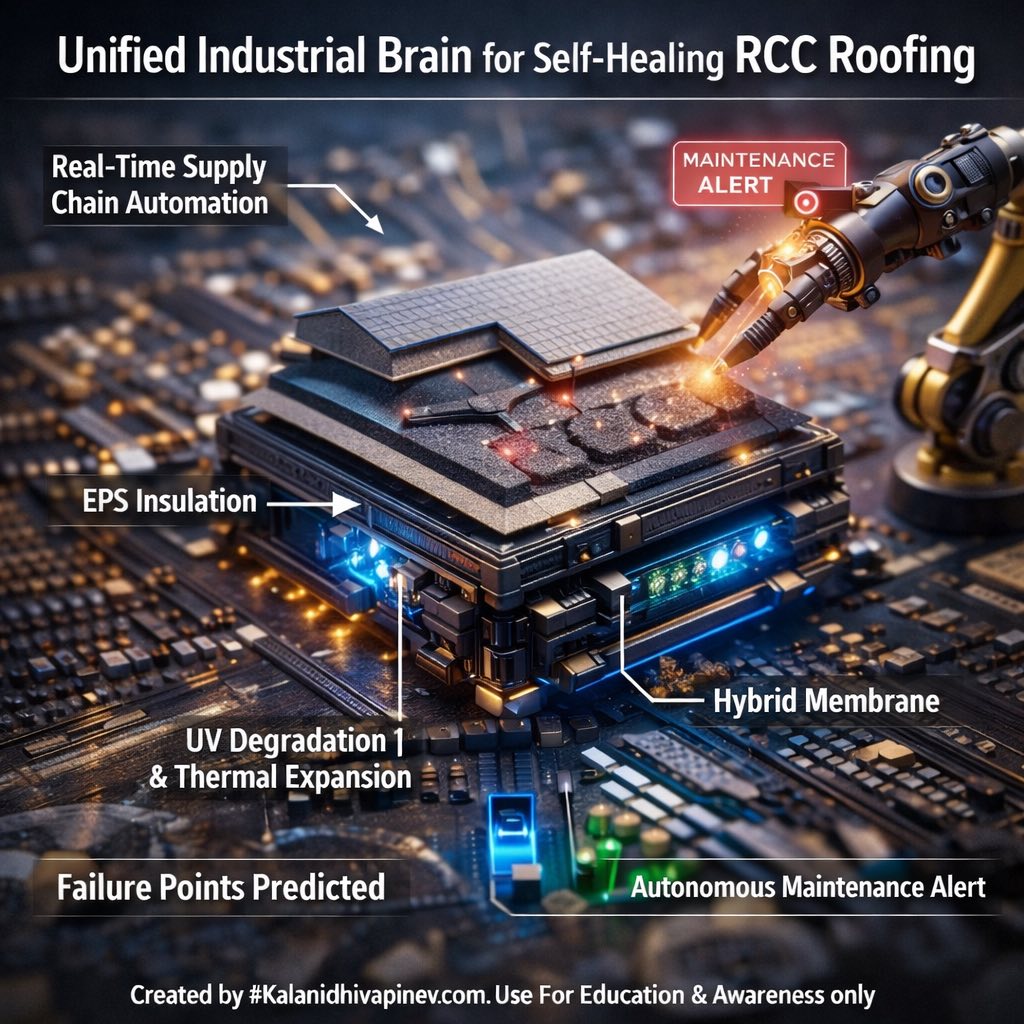
Dr Fixit Autonomous Layer-Wise Waterproofing Architecture for Heavy-Duty RCC Roofing

Reinforced cement concrete is the primary structural element supporting heavy-duty roofing systems. It provides compressive strength while embedded steel reinforcement handles tensile stresses. Proper curing and cover thickness are critical to long-term durability and waterproofing performance. RCC acts as the final load-bearing defense against environmental and mechanical impacts.
Glossary: RCC refers to concrete reinforced with steel bars or mesh to improve structural capacity.
Waterproofing prevents water ingress into structural components and occupied spaces. It protects RCC from corrosion, carbonation, and freeze–thaw damage. Effective waterproofing extends service life and reduces maintenance costs. Layer compatibility and correct application sequence are essential for performance.
Glossary: Waterproofing is the process of making a structure resistant to water penetration.
A membrane forms the primary barrier against water infiltration. It accommodates minor structural movements without cracking. Membrane continuity at joints and penetrations is critical for system integrity. Material selection depends on exposure, load, and durability requirements.
Glossary: A membrane is a continuous flexible or semi-flexible waterproof layer.
Hybrid systems combine multiple material technologies for improved performance. They balance flexibility, strength, and resistance to weathering. Hybrid layers enhance redundancy in waterproofing assemblies. This approach reduces the risk of single-point failure.
Glossary: Hybrid denotes a combination of different materials or methods in one system.
Expanded polystyrene provides thermal insulation and weight reduction. It improves energy efficiency while maintaining structural compatibility. Proper density selection ensures compressive strength under roofing loads. EPS also supports slope formation for drainage.
Glossary: EPS is a lightweight rigid foam insulation material.
Slope ensures positive drainage and prevents ponding water. Adequate gradient reduces hydrostatic pressure on membranes. Poor slope design is a common cause of waterproofing failure. Consistent slope must be maintained across the entire roof surface.
Glossary: Slope is the intentional incline provided to direct water flow.
Drainage removes surface water efficiently from the roof system. It minimizes water retention and membrane stress. Proper detailing at outlets and gutters is essential. Blocked drainage can negate even high-quality waterproofing.
Glossary: Drainage is the controlled removal of water from a surface.
The substrate is the base surface receiving waterproofing layers. Its condition directly affects adhesion and performance. Cracks, laitance, or moisture must be addressed before application. Surface preparation is a critical quality step.
Glossary: Substrate refers to the underlying surface on which materials are applied.
Cracks act as direct pathways for water ingress. They may result from shrinkage, thermal movement, or structural loading. Crack treatment must be compatible with the waterproofing system. Ignoring cracks compromises long-term durability.
Glossary: Cracks are linear separations in concrete caused by stress or movement.
Moisture presence during application affects bonding and curing. Excess moisture can cause blistering or debonding. Moisture assessment is essential before installing membranes. Controlled conditions ensure reliable performance.
Glossary: Moisture is the presence of water in liquid or vapor form.
Compliance ensures the system meets prescribed technical requirements. It reduces legal and operational risks over the asset life. Adherence to specifications ensures predictable performance. Documentation supports accountability and traceability.
Glossary: Compliance is conformity with established rules or standards.
Standards define minimum acceptable performance criteria. They provide consistency across design and construction practices. Following standards improves safety and reliability. They evolve to reflect improved materials and methods.
Glossary: Standards are formally established technical benchmarks.
Durability measures the ability to resist degradation over time. Environmental exposure directly affects durability outcomes. Proper material selection enhances long-term resistance. Durable systems reduce lifecycle costs.
Glossary: Durability is the capacity to withstand wear, weather, and aging.
Thermal movement occurs due to temperature variation. It induces expansion and contraction in roofing systems. Waterproofing layers must accommodate thermal stresses. Poor thermal design leads to cracking or delamination.
Glossary: Thermal relates to heat and temperature effects.
Ultraviolet exposure degrades exposed materials over time. UV-resistant layers protect underlying components. Prolonged exposure accelerates aging and brittleness. Protective coatings mitigate UV damage.
Glossary: UV refers to ultraviolet radiation from sunlight.
Inspection identifies defects before they become failures. Regular checks improve maintenance planning. Visual and physical assessments ensure system integrity. Early detection reduces repair scope.
Glossary: Inspection is the systematic examination of a structure or system.
Maintenance preserves performance throughout the service life. Preventive actions reduce unexpected failures. Scheduled maintenance supports warranty conditions. Neglect accelerates deterioration.
Glossary: Maintenance is routine care to keep systems functional.
Protection layers shield waterproofing from mechanical damage. They distribute loads and resist abrasion. Proper protection extends membrane life. They are essential under heavy-duty usage.
Glossary: Protection refers to measures that guard against physical harm.
Load includes dead, live, and environmental forces. Roofing systems must safely transfer loads to the structure. Overloading compromises performance. Load calculations guide material selection.
Glossary: Load is the force applied to a structural element.
Bonding ensures adhesion between layers. Weak bonding leads to delamination and leaks. Surface cleanliness is essential for effective bonding. Compatible materials improve bond strength.
Glossary: Bonding is the adhesion between two materials.
Application technique affects system reliability. Uniform thickness ensures consistent protection. Skilled workmanship reduces defects. Environmental control during application is vital.
Glossary: Application is the method of installing materials.
Curing allows cementitious layers to achieve strength. Improper curing causes shrinkage cracks. Controlled moisture and temperature are required. Adequate curing improves durability.
Glossary: Curing is the process of maintaining conditions for material hardening.
Insulation reduces heat transfer through the roof. It improves comfort and energy efficiency. Proper placement avoids thermal bridging. Insulation must withstand imposed loads.
Glossary: Insulation is material that resists heat flow.
Resistance defines the ability to oppose damaging forces. Waterproofing must resist water pressure and chemicals. Higher resistance improves reliability. Material composition influences resistance.
Glossary: Resistance is the capacity to withstand external effects.
Expansion occurs when materials increase in size due to heat. It must be accommodated in design. Movement joints manage expansion stresses. Ignoring expansion causes cracking.
Glossary: Expansion is the increase in dimensions from temperature change.
A protection course safeguards membranes from damage. It allows safe movement and usage above. Material choice depends on exposure conditions. It adds redundancy to the system.
Glossary: Protection course is a sacrificial protective layer above waterproofing.
Integrity reflects the completeness of the waterproofing system. Continuous layers prevent leakage paths. Detailing quality determines integrity. Loss of integrity leads to failure.
Glossary: Integrity is the state of being whole and undamaged.
Performance measures how well the system functions over time. It depends on design, materials, and execution. Monitoring performance guides maintenance decisions. Consistent performance ensures reliability.
Glossary: Performance is the effectiveness of a system in service.
Lifecycle considers the system from installation to end of service. Early decisions affect long-term costs. Durable design improves lifecycle value. Maintenance planning is part of lifecycle management.
Glossary: Lifecycle is the complete duration of a system’s use.